The Bank of Canada Held Rates Again. Here Is Why That Does Not Help Your 2028 Presale Completion
The Bank held at 2.25 per cent on September 2. But a rate hold lasts 120 days and your presale completes in 2028, so almost none of the standard advice actually reaches you.


On September 2 the Bank of Canada held its overnight rate at 2.25 per cent. The Bank Rate stayed at 2.5 per cent, the deposit rate at 2.20 per cent, and the policy rate has now been unchanged since October 2025, when it came down from 2.50 per cent.
The commentary around the decision has been what you would expect. Mortgage brokers pointed out that discounted fixed rates are still available below 4 per cent. Industry associations called the hold a signal of stability. The standard advice arrived on cue: get a rate hold, lock in today’s pricing for up to 120 days, protect yourself from volatility.
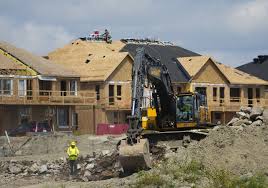
That advice is fine if you are buying a resale condo in Kitsilano and closing in six weeks. If you are buying a Metro Vancouver presale that completes in 2028 or 2029, almost none of it applies to you, and I think the gap between the two situations is the single most underexplained thing in this market right now.
The rate hold everybody is discussing is one you cannot actually use
A rate hold is a lender’s commitment to honour a quoted rate for a fixed window, usually up to 120 days. Four months. That is the entire product.
Your presale completion is not in four months. It might be in thirty-six. When you sign a presale contract, you are agreeing to buy at a fixed price on a date the developer will confirm later, and you will arrange your mortgage close to that date, at whatever rates exist then. No lender will commit to a rate three years out, because no lender can price that risk.
So the September 2 hold tells you something about today’s borrowing environment. It tells you very little about the one you will actually borrow in. Presale buyers who feel reassured by a rate hold headline are reading a forecast that does not extend to their horizon.
What the decision does tell you is worth reading carefully. The Bank noted that the continuing conflict in the Middle East is keeping energy prices elevated, and that new U.S. tariffs and Canadian counter-measures followed the breakdown of trade talks. Headline CPI is running at 3.0 per cent. Unemployment edged down to 6.4 per cent in July, but the Bank still sees continued excess supply in the economy.
That is a central bank pinned between two risks it cannot resolve at once. Ratehub’s Jamie David framed it as the Bank having “little room to move aggressively in either direction.” Two decisions remain this year, on October 28 and December 9. Anyone telling you confidently what happens after that is guessing.
What actually determines the rate you complete at
Three things, and the policy rate is only loosely connected to the first.
Fixed mortgage rates track government bond yields, not the overnight rate. That is why fixed pricing can move in a week the Bank does nothing. As of the September decision, the lowest discounted five-year fixed was around 4.09 per cent, with two-year fixed near 3.89 per cent and three-year near 3.94 per cent. Where those sit in 2028 depends on where bond yields go, and bond yields will respond to the trade conflict and to energy prices as much as to anything the Bank announces.
Variable rates do follow the policy rate, through prime, which most major banks are holding at 4.45 per cent. The lowest discounted five-year variable was around 3.35 per cent at the September decision.
Your own qualifying position is the third piece, and it is the one you can control. Lenders qualify you at a rate above your contract rate under the federal stress test, and they re-underwrite you at completion, not at signing. Your income, your other debts, your credit and your down payment all get looked at again, years after you signed. I have seen more presale completions get difficult because a buyer’s income situation changed than because rates moved.
The question to ask instead
Not “where will rates be.” Nobody knows. The better question is: at what rate does this purchase stop working for me?
Take the purchase price, subtract your deposit, and run the payment at 5 per cent, at 6 per cent, at 7 per cent. If the number at 6 per cent makes you uncomfortable, you have learned something concrete and useful about the size of unit you should be shopping for. That exercise takes ten minutes and it is worth more than any forecast.
Then do the same for the deposit schedule. Most Metro Vancouver presales run 15 to 20 per cent staged over 6 to 18 months, though a number of projects are currently offering 10 per cent structures. Those instalments come due on contract dates regardless of what the Bank of Canada does.
If you want the mechanics of how completion, financing and contract dates fit together, the pages of a 200-page presale contract that actually matter covers the clauses involved, and presale versus completed new construction is the honest comparison if the financing timeline is what is bothering you. A completed home you can finance today sidesteps this entire problem.
Market Signals
The sale. On August 26 the Harvard Apartments at 1240 St. George Avenue in North Vancouver’s Central Lonsdale sold for $12,250,000, or $382,813 per unit at a 4.0 per cent cap rate, according to vancouvermarket.ca. It is a 32-suite, three-storey wood-frame walk-up built in 1970, on an 18,077 square foot corner lot directly across from Lions Gate Hospital, zoned RM-1 for medium-density apartment residential use. Cushman Wakefield listed and sold it.
A 4.0 per cent cap rate on 1970 wood-frame stock is aggressive. For comparison, the Twin Lakes townhome portfolio traded three weeks earlier at 4.7 per cent. I am not going to attach a storey count or an FSR to this site: RM-1 is what is on the record today, and the City of North Vancouver has an active planning process reimagining the Central Lonsdale corridor, so the density that will eventually govern sites like this is still being written. What the price tells you is that patient capital is buying the land under old rental buildings on the North Shore, and that is usually two to three cycles ahead of any presale launch.
Builder watch. Closer to home for presale buyers, Portwood Development 3 Limited Partnership and Portwood Development 4 Limited Partnership obtained CCAA protection on August 14, 2026 on application by affiliates of Woodbourne Canada Management Inc., which were owed roughly $125 million as of August 17. The debtors own Phases 3, 4 and 5 of Woodland Park, a five-phase Port Moody residential project originally assembled in 2018 for about $97.5 million. Phase 3 is roughly 3.28 acres at 1218 Cecile Drive with permits for about 158,000 square feet of multi-family rental. Phases 4 and 5 total about 13.65 acres, rezoned for residential, with 96 townhomes on them. PwC is the monitor, and it is asking the court to approve a sale process backed by a stalking horse bid.
Two details are instructive. First, the phases are legally interdependent: under the development agreement with the City of Port Moody, Phase 3 has to be materially advanced before much of Phases 4 and 5 can be occupied. A master-planned community is not five independent projects, and trouble in one phase can stall the ones you bought into. Second, the petitioners deliberately chose CCAA over receivership partly because receivership over the title nominee could have triggered purchaser rescission rights under B.C. real estate legislation. Even the lenders are now structuring around presale buyer protections. That is a real shift.
What this means for buyers
Stop treating the Bank of Canada calendar as your buying signal. Two decisions are left this year and neither will change the arithmetic of a 2028 completion.
Do this instead. Stress-test your own purchase at 6 and 7 per cent before you sign, not the rate you are quoted today. Map the deposit instalment dates onto your actual cash flow. Ask the developer’s sales team directly what happens to your completion date if the project slips, and read what the contract says rather than what you are told. Look at who is financing the project and how many phases the plan depends on, because Port Moody is a live reminder that phasing risk is real. And if the financing uncertainty is genuinely what is keeping you up, seriously consider completed inventory, where you can finance today at a rate you can actually see.
The buyers who do well in this market are not the ones who timed the Bank of Canada. They are the ones who bought something they could still afford if they were wrong about rates.
Considering a Metro Vancouver presale?
I track 489 developments across 14 cities, 216 of them active right now, and I will run the completion math with you before you sign anything. If you want an honest read on a specific project, including its phasing and who is behind the financing, book a call or register for VIP presale access. No pitch, just the spreadsheet.