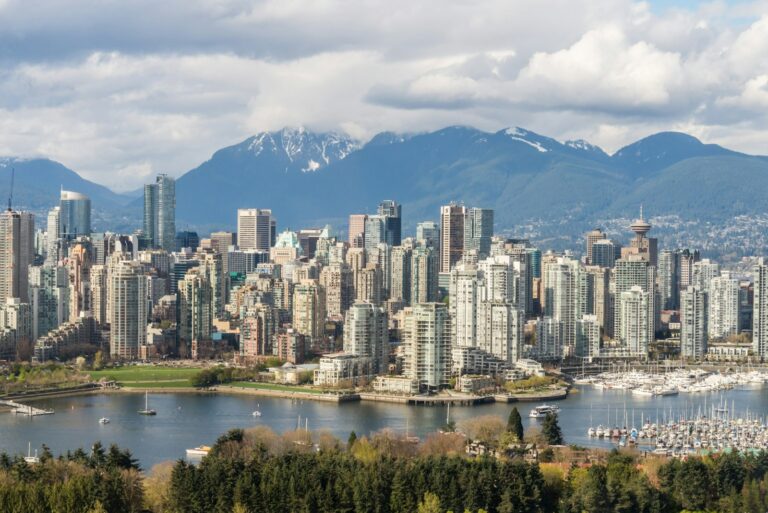
Ottawa’s New Immigration Shift Could Cool Housing Demand — But Not Enough for Vancouver
Canada’s population boom has been one of the strongest economic forces of the past five years. Record immigration helped keep the economy afloat during pandemic recovery and filled major labour shortages. But it has also...


Canada’s population boom has been one of the strongest economic forces of the past five years. Record immigration helped keep the economy afloat during pandemic recovery and filled major labour shortages. But it has also intensified one problem: housing demand that far outpaced supply, especially in cities like Vancouver.
Now the federal government is taking notice. Ottawa has signalled that immigration targets may be scaled back starting in 2026, a move that could mark a turning point for the housing market.
A Slowdown After Record Growth

In 2023 and 2024, Canada’s population grew by more than one million people each year, a modern record. Most new arrivals settled in Ontario, British Columbia, and Alberta. Metro Vancouver absorbed tens of thousands of newcomers, many of whom entered the rental market first before trying to buy.
That level of growth created pressure on every part of the housing system. Rents soared, vacancy rates dropped below one percent, and developers struggled to build fast enough. Now, with construction starts slowing and affordability at a breaking point, policymakers are weighing how to ease the strain.
According to recent comments from the Bank of Canada and Immigration Minister Marc Miller, Ottawa may adopt a more gradual growth path, focusing on temporary resident reductions and balanced regional distribution rather than record intake numbers.
What It Means for Vancouver
If immigration levels are moderated, the immediate impact will likely be felt in rental markets first. Fewer new arrivals could reduce short-term rental demand, allowing vacancy rates to recover slightly.
For the ownership market, the effect will be slower. Immigration has been a consistent driver of long-term housing demand in Greater Vancouver, particularly among skilled workers and international students transitioning to permanent residency. Even with a lower national target, B.C. will remain a top destination for new arrivals thanks to its job market, climate, and established cultural communities.
In other words, a national slowdown will not erase Vancouver’s demand pressures. It will only temper them.
The Balancing Act for Policy Makers
Reducing immigration is politically sensitive because newcomers are vital to Canada’s workforce. Construction, healthcare, and technology sectors rely heavily on skilled immigrants.
If the federal government cuts too deeply, it could worsen labour shortages and slow economic growth. But if population growth stays high without matching housing supply, affordability could deteriorate even further.
Ottawa is trying to thread that needle: maintain immigration for economic stability while preventing another surge in housing costs.
For Buyers and Sellers
For buyers, a slight moderation in population growth could help cool the pace of bidding wars, especially in entry-level condos and townhomes. Renters may also see relief if supply catches up in 2026 and beyond.
For sellers and investors, slower population growth could mean a more stable market rather than a rapidly appreciating one. Investors relying solely on short-term appreciation will need to be more selective, focusing on strong locations and projects with real end-user appeal.
Presale developers in Vancouver may also shift marketing strategies toward local buyers rather than relying on constant population expansion to drive absorption.
What To Watch Next
Immigration levels for 2026 and 2027 will be confirmed in Ottawa’s updated plan later this year. Real estate professionals will be paying attention not just to total numbers but to where newcomers are allowed to settle. If more people are directed to smaller cities, demand could soften slightly in the Metro Vancouver core but strengthen in the Fraser Valley and Vancouver Island.
Keep an eye on population growth data and CMHC’s next rental market report to see whether vacancy rates begin to recover.
Takeaway: A Small Shift, Not a Fix
Lower immigration targets may relieve some pressure on housing demand, but they will not solve the affordability crisis. Vancouver’s real estate challenges are rooted in decades of underbuilding, zoning bottlenecks, and construction costs that continue to rise.
Even with slower population growth, the city remains a magnet for newcomers and investors alike. The more realistic outcome is not a crash or a correction, but a return to balance, a market that moves from overheated to simply competitive.