Vancouver Just Elected Its First Green Mayor. Here Is What His Housing Plan Means for the Downtown Eastside, Renters and Buyers
Pete Fry is Vancouver's first Green mayor. Here is his housing strategy, how it differs from ABC's on the Downtown Eastside, and what it means for renters and buyers.

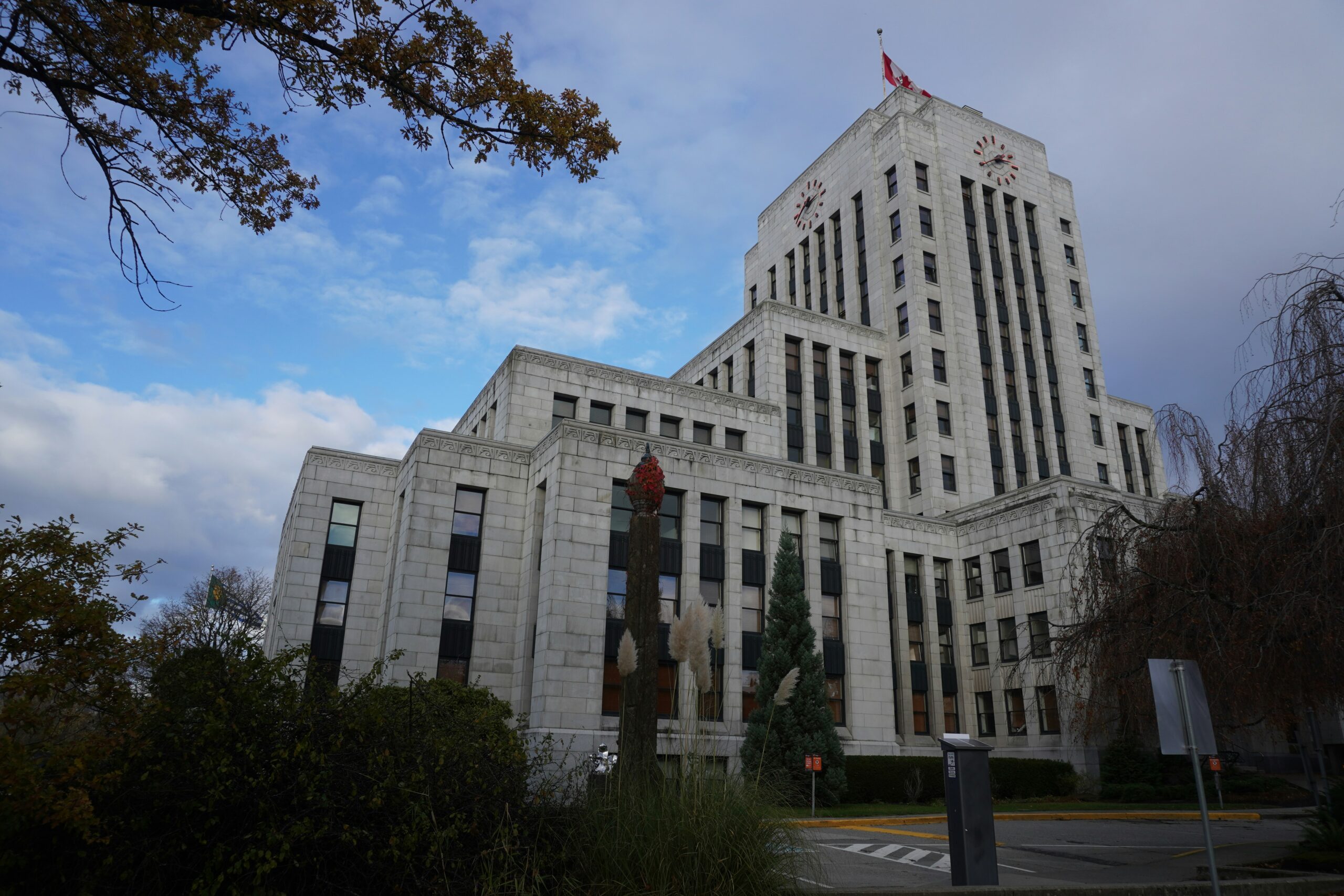
Vancouver has a new mayor. On October 17, Pete Fry of the Green Party of Vancouver defeated incumbent Ken Sim, becoming the city’s first Green mayor. Fry won with 98,748 votes, about 31,000 more than Sim, according to the City’s official results. Turnout jumped to 43.4%, up from 36.3% in 2022.
This was more than a change of mayor. It was a change of direction on housing, and nowhere is that sharper than in the Downtown Eastside. Over the last four years, ABC focused on speed, supply and a reset of the neighbourhood’s services. The Greens campaigned on affordability, renters, low-rise housing and reversing some of Sim’s signature decisions.
Here is what the new council looks like, what Fry has promised, and what it could mean for the people who rent, buy and live here.
The new council
The Greens won four council seats plus the mayor’s chair. COPE also won four seats, with Sean Orr topping the council vote. OneCity won one seat. ABC’s Mike Klassen was the only member of the outgoing majority returned to council.
No single party has a majority. The Greens and the mayor hold five of 11 votes. The three progressive parties together hold 10 of 11, which Daily Hive described as a left-wing supermajority. In practice, Fry will need COPE or OneCity on side to pass anything. That matters on housing. COPE’s Sean Orr has said he helped defeat ABC’s proposed Vancouver Housing Development Office because it had no requirement to build affordable housing, according to The Tyee.
Fry’s housing strategy in plain terms
The Green Party of Vancouver’s 2026 platform has five main ideas on housing.
Build lower and faster. The platform backs four to six storey wood-frame buildings, single egress staircase buildings, rowhomes, townhomes and infill, along with pre-approved designs and a “Vancouver Special 2.0” kit approach. In a Daily Hive interview before the vote, Fry argued that large concrete towers are hard to finance: “Nobody wants to buy them, and developers are going underwater.”
Make big projects pay into affordability. Large developments would be required to provide affordable homes on site, or contribute land, units or cash instead. Fee cuts and fast-tracked permits would be reserved for what the platform calls “truly affordable” housing, with affordability measured at 30% of median household income.
Put the City into housing directly. The platform proposes an affordable housing czar, a Vancouver Public Housing Bond, and a rapid acquisition fund to buy and protect existing rental buildings before they are redeveloped. City land would go to non-profit, co-op and community land trust housing rather than for-profit projects.
Protect renters. Fry would restore the Renters’ Office that ABC closed, strengthen tenant relocation protections, and tighten maintenance rules on mould and moisture. The platform would also reverse the policy that allowed micro-suites as small as 250 square feet.
Go after empty and stalled property. It would close Empty Homes Tax loopholes and set a time limit between a rezoning approval and the start of construction.
For contrast, ABC’s record, as summarized in The Tyee’s review, centred on its 3-3-3-1 permitting targets, multiplex zoning, removing parking minimums, pre-zoning parts of the Broadway Plan area, and approving large sites such as Jericho Lands and Heather Lands. ABC admits it did not consistently hit its own permit targets. Many of those approvals have not been built yet because of the downturn.
The Downtown Eastside is where the change is sharpest
In January 2025, Sim announced a new direction for the Downtown Eastside. The City would pause net new supportive housing in the neighbourhood, focus on renewing its aging single room occupancy (SRO) hotels, and update the 2014 Downtown Eastside Area Plan, which calls for a mix of 60% social housing and 40% market rental. Sim pointed out that Vancouver holds 77% of the region’s supportive housing with 25% of its population, and argued new supply should be spread across Metro Vancouver.
Council approved the pause 6 to 3 in February 2025. Fry voted against it and warned it would “make things worse.”
Fry’s platform would reverse what it calls Sim’s supportive housing ban, but with conditions. New supportive housing would face occupancy permit requirements to make sure buildings are properly staffed and serviced. In a mayoral forum earlier this month, he put it this way: “We need to figure it out here as a city. We can’t keep pointing the finger and waiting for somebody else to do it.”
Beyond housing, the Green plan for the neighbourhood includes a non-police Community Response Outreach Workers team for non-emergency calls, more daytime spaces, shelters and washrooms, small shelter villages with locking micro-cabins, and an Office of Community Safety to coordinate City departments.
Sim campaigned on a different model. He pointed to more policing through a new VPD district, more than 50 mental health workers, and a non-binding plebiscite asking the Province for a secure facility with at least 100 involuntary care beds. Fry opposed holding that plebiscite, but voters backed it. In the official results, 68.6% said yes to strengthening laws against open-air hard drug use, and 68.0% said yes to asking the Province for the secure care facility. The plebiscite is not binding, so it is now up to the new council, and the Province, to decide what to do with that result.
The biggest open question is the Area Plan. Sim’s update aimed for a wider mix of housing, businesses and services. The Green platform does not mention it, and whether the new council keeps, rewrites or drops that update has not been decided.
The case for caution
Platforms are not policy. Every piece above needs staff reports, budgets and council votes. Some depend on the Province, including funding for supportive housing and Vancouver’s provincial housing targets. The Green platform itself says it wants to work with the Province to resolve those targets, so expect negotiation rather than quick change.
The coalition math also matters. With five of 11 votes, Fry will have to build agreement with COPE and OneCity on each file, and their priorities will not always match his.
A splash of presale
For buyers, the honest answer is that Vancouver proper is not where most of the presale action is right now. From what I am tracking, Burnaby, Coquitlam and Surrey have far more going on than the city does. Fry’s comments about towers describe a market problem as much as a political one. Metro Vancouver already has a large overhang of finished but unsold condos, and fixed mortgage rates have been rising.
If you already own a Vancouver presale, nothing changes. Your contract, deposit and completion date are not decided by council, and projects that already have their rezoning keep it.
If you are shopping in the city, two things are worth watching. First, whether the new council moves quickly on pre-approved low-rise designs, which could bring more four to six storey and townhome options into Vancouver presales. That is the kind of home families have been crossing the bridge to find, as we covered in our look at East Vancouver townhomes. Second, ask any sales team whether a project’s rezoning is fully enacted or only approved in principle. The first carries less policy risk.
The bottom line
Vancouver voted for a clear change at city hall. On housing, the direction now leans toward low-rise, rental, non-market and renter protection, and away from a tower-first approach. In the Downtown Eastside, Fry has promised to reverse the pause on new supportive housing, with new operating conditions attached. For buyers, existing contracts are safe, and the real story for presales will keep playing out mostly in Burnaby, Coquitlam and Surrey.
If you want first access to Metro Vancouver presale launches, incentives and the numbers before they go public, register for VIP presale access at vancouverdwelling.ca.
This post is general information about announced platforms and election results, and is not an endorsement of any party or candidate. Results are from the City of Vancouver’s official declaration on October 21, 2026.