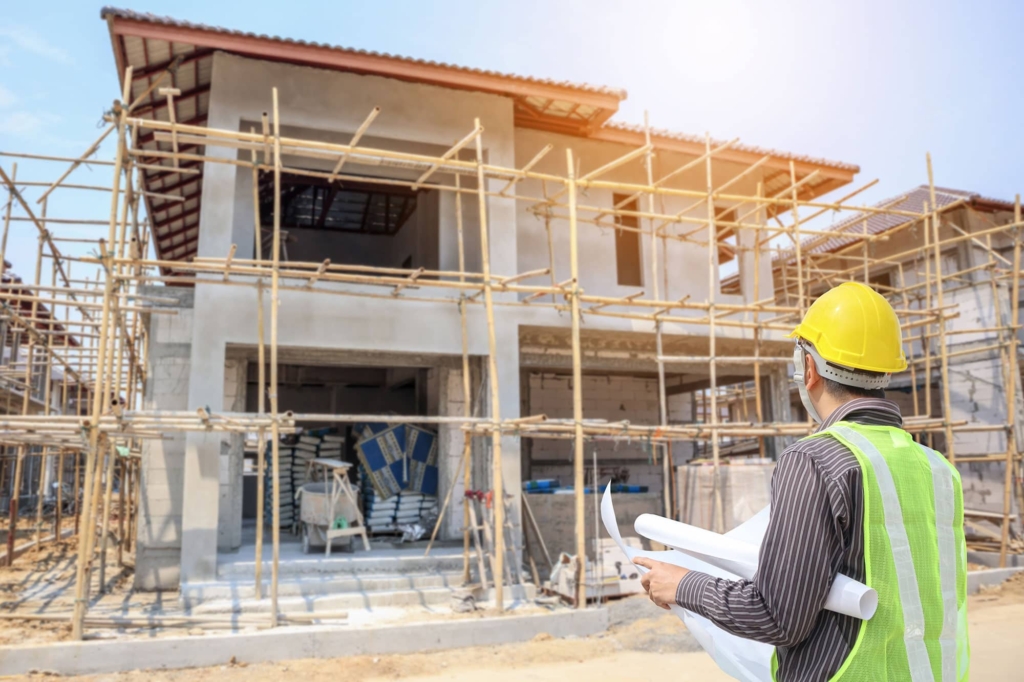
Tariffs, Trade Wars, and the Price of a 2×4: How Global Economic Tensions Could Undermine Vancouver’s Construction Pipeline
How do global tariffs, U.S.-China tensions, and disrupted trade routes impact the price of lumber and housing affordability in Vancouver? A look at the hidden costs of geopolitical conflict on local real estate.
When people think about housing prices in Greater Vancouver, their minds go straight to demand: foreign buyers, interest rates, immigration, or investor speculation. Rarely do we pause to consider the other side of the equation, the cost of actually building the homes themselves. And yet, the silent force reshaping housing affordability in our region may not be who’s buying homes, but what it costs to build them. Increasingly, that cost is being driven up by international trade policy, rising tariffs, and fractured global supply chains.
Consider the humble 2×4. It’s one of the most basic inputs in construction, yet its price volatility over the past five years has rivalled Bitcoin. During the pandemic, lumber prices hit historic highs, in some cases tripling from previous averages. While prices have since come down, they remain unstable, and much of that instability is rooted in geopolitics, not local demand.
We’re now entering a new era of global trade friction. Tensions between the U.S. and China are intensifying, with tariffs and retaliatory trade measures becoming more commonplace. Canada, though not always the direct target, often finds itself caught in the crossfire. This matters more than it might seem. A surprising amount of building materials, fixtures, and finishes, everything from steel and glass to cabinets and copper wiring, depend on open trade flows and efficient, low-cost imports. When those are disrupted, the entire development pipeline starts to feel the pressure.
On top of this, the renegotiation of North American trade relationships post-NAFTA, coupled with U.S. protectionist policies under both Trump and Biden, have raised costs on Canadian exports like softwood lumber. The ongoing Canada-U.S. softwood lumber dispute, decades in the making, continues to inflate costs for domestic builders and erode profit margins on both sides of the border. In B.C., where the forestry industry remains a pillar of the economy, these tariffs don’t just affect exporters. They ultimately drive up domestic lumber prices as well.
For Vancouver developers, these issues are more than academic. Higher material costs create tighter pro formas, delay project timelines, and in some cases, kill projects entirely. Marginal or mid-density infill projects, already on the razor’s edge of feasibility due to high land costs and zoning hurdles, are the first to be affected. The knock-on effect is clear: fewer housing starts, slower construction, and a longer runway to address the region’s chronic supply shortage.
What makes this issue particularly complex is that it’s largely invisible to the average buyer. Unlike interest rates, which change monthly and dominate the headlines, tariff impacts are felt gradually, like inflation through the back door. A townhouse that once cost $750,000 to build now costs $800,000, but buyers rarely know why. The narrative gets reduced to “greedy developers” or “housing bubbles,” when in fact, global forces are quietly reshaping the economics of supply.
And this doesn’t only impact large-scale condo towers. Smaller-scale builders, those constructing laneway homes, custom builds, duplexes, and triplexes, are hit even harder. Without the bulk purchasing power of institutional developers, they absorb the full force of these cost hikes, which are then passed directly onto end users. It’s no coincidence that custom home construction costs in Metro Vancouver are now exceeding $350 to $400 per square foot, even for modest designs.
This is also where policy and reality begin to clash. Governments at every level are pushing for increased housing supply, faster building timelines, and more affordability, but those efforts are being quietly undercut by an international trade environment that’s working in the opposite direction. Incentives like density bonuses, tax breaks, or streamlined permitting can only go so far when materials cost 20% more than they did two years ago.
Looking forward, things may get worse before they get better. As global political instability ramps up: be it from China-U.S. decoupling, escalating tensions in the Middle East, or renewed protectionism in a potential Trump 2.0 administration, supply chain volatility could intensify. Add in the pressure of inflation, interest rate fluctuations, and rising insurance premiums, and it’s clear the real estate sector is navigating a much more complex environment than even five years ago.
For local buyers, this means recalibrating expectations around price and timelines. The dream of “more affordable housing through increased supply” will remain elusive if the cost of that supply keeps rising. For investors and developers, it means building more contingencies into budgets, tracking international trade developments, and considering long-term partnerships that can insulate against material cost shocks. And for policymakers, it’s a wake-up call: no amount of zoning reform will solve affordability if materials remain subject to the whims of global politics.
In short, Vancouver’s real estate market doesn’t operate in a vacuum. Every nail, every sheet of plywood, every shipment of tile is part of a much larger global dance. When that dance is disrupted by tariffs and trade wars, the rhythm of our housing market falters. And until we start connecting those dots, we risk misdiagnosing the very problems we’re trying to solve.
Trump, Populism & Cross-Border Capital: Will U.S. Political Turbulence Drive More American Investment into Vancouver Real Estate?
Trump, Populism & Cross-Border Capital: Will U.S. Political Turbulence Drive More American Investment into Vancouver Real Estate?
Politics Doesn’t Stop at the Border
In real estate, location is everything, but lately, politics is proving to be just as critical. With the 2024 U.S. election looming large and Donald Trump leading in many Republican polls, investors across North America are bracing for uncertainty. For Vancouver, this raises a surprising but very real question: Could renewed political turmoil south of the border push more U.S. buyers and capital into our real estate market?
While foreign buyers from Asia have historically driven headlines in Greater Vancouver, American investment often flies under the radar. That may be changing, and fast.
Section 1: A History of Safe-Haven Buying in Vancouver
Vancouver has long been seen as a safe, stable, and livable city, attributes that appeal not only to international investors but also to Americans seeking a hedge against political or economic volatility.
Historically, global uncertainty has pushed capital into B.C. real estate:
• 1997: Hong Kong handover led to major buying from Chinese investors.
• 2008: The U.S. financial crisis saw an uptick in Canadian real estate activity.
• 2020: COVID-19 triggered a global reassessment of lifestyle, livability, and second-home investments.
In each of these cycles, Vancouver acted as a financial and emotional refuge. The question now is whether it will play that role again. This time for disillusioned Americans.
What a Trump Comeback Could Mean for U.S. Investors
If Donald Trump returns to the White House, or even remains a major political force, investors may look to hedge their exposure to U.S. assets. Key concerns driving this trend could include:
1. Political Risk and Polarization
Ongoing divisions, threats to democratic institutions, and even talk of “national divorce” in the U.S. are pushing some high-net-worth Americans to explore exits, both literal and financial.
2. Tax Uncertainty
There’s speculation that a Trump administration could target capital gains, wealth taxes, or use tariffs as fiscal tools in unpredictable ways. This adds volatility to U.S. wealth preservation strategies.
3. U.S. Real Estate Volatility
Rising insurance costs due to climate risk (especially in Florida and California), interest rate uncertainty, and property tax volatility in red vs. blue states are making Canadian markets look more appealing.
Vancouver as a Hedge Market: Still Attractive?
Even with cooling market conditions in early 2025 and regulatory measures like the foreign buyer ban and vacancy tax, Vancouver remains desirable for American buyers for several reasons:
• Proximity: West Coast Americans can easily commute or relocate to Vancouver.
• Cultural Alignment: Language, legal systems, and lifestyle are familiar and comfortable.
• Market Maturity: Vancouver’s real estate market is seen as transparent and resilient.
According to BC Assessment, non-resident ownership in Metro Vancouver from the U.S. increased modestly from 2022 to 2024, despite foreign buyer restrictions, likely due to workarounds like purchasing through corporate structures, partnerships, or exempt visa categories.
Are We Ready for a New Wave of U.S. Capital?
This trend could come with upsides and drawbacks:
Potential Benefits:
• Luxury Segment Boost: Increased demand for high-end homes, particularly in West Vancouver, Downtown, and Coal Harbour.
• Increased Revenue: Higher-end buyers pay more in property taxes, school levies, and potentially contribute to local economies.
Risks and Concerns:
• Affordability Pressures: A new surge in non-resident buying could reheat already stressed segments.
• Policy Complexity: Local and federal policies may struggle to adapt to American-specific flows vs. broader “foreign buyer” categories.
• Market Distortion: Capital inflows not tied to local economic fundamentals can distort true demand metrics.
What Should Buyers, Sellers, and Investors Do?
For First-Time Buyers:
Stay informed on macroeconomic shifts. U.S. capital flows could drive new competition in select neighborhoods, particularly in luxury and near-border markets like White Rock or West Vancouver.
For Investors:
Watch for volatility in U.S. politics to influence short-term demand spikes. Multi-family and rental assets could benefit if U.S. buyers choose to invest rather than relocate.
For Developers:
Start factoring in the possibility of more American buyers entering the pre-sale and luxury market segments, especially as interest in “safe haven” cities grows.
Final Thoughts: It’s Not Just a U.S. Election: It’s a Global Signal
Whether or not Trump regains the presidency, the broader forces he represents, populism, economic nationalism, and political unpredictability, will continue to shape investor psychology. For Vancouver, that means being ready for capital that is not just looking for returns, but for refuge.
As a gateway city with global visibility and relative political calm, Vancouver may once again find itself at the receiving end of external turmoil, and that could reshape our real estate market in unexpected ways.
The Never-Ending Hoop Jump: Vancouver’s Building Bylaws Are Driving Developers to the Brink
Vancouver is renowned for its breathtaking skyline and commitment to sustainability, but behind the polished exterior lies a reality that’s frustrating developers to no end. Building new homes in Vancouver has become an uphill battle, thanks to an ever-evolving maze of city bylaws, environmental mandates, and stringent building codes. While these changes are meant to align with progressive goals like reducing emissions and improving affordability, the constant shifts are leaving developers overburdened, projects delayed, and costs spiraling out of control.
Are we building for the future, or are we tying ourselves in so much red tape that the city’s housing crisis becomes unsolvable?
The Gas Appliance Ban: A Burning Issue
One of the most contentious changes is the city’s push to phase out gas appliances in favor of electric alternatives. On the surface, this aligns with Vancouver’s Climate Emergency Action Plan, aiming to reduce greenhouse gas emissions. But for developers, this shift is more than just swapping out a stove. It’s a logistical and financial headache.
The Hidden Costs of Going Electric
Upgrading infrastructure to support electric systems, like heat pumps and induction stoves, requires significant investment. Developers face increased costs for rewiring buildings, installing larger electrical panels, and ensuring compatibility with future energy needs.
Even worse, this comes with a potential disconnect from the market. Many homebuyers, especially in the luxury segment, still prefer gas stoves and fireplaces. Developers are caught in the crossfire between meeting city regulations and satisfying customer demands, making it hard to balance sustainability with marketability.
Building Codes: A Moving Target
Vancouver’s building codes are some of the most progressive in North America, which sounds great in theory. In practice, these frequent updates feel like a constant moving target for developers.
Higher Standards, Higher Costs
Energy efficiency mandates, accessibility requirements, and environmental standards are all noble goals. But each update adds new complexities to designs, requiring reworked blueprints, additional consultant fees, and increased construction costs.
The BC Energy Step Code, for example, demands new homes meet specific performance benchmarks, which often require expensive materials and specialized labor. These rising costs don’t just hurt developers. They trickle down to buyers, pushing already sky-high home prices even higher.
Permitting Delays: Where Dreams Go to Die
Beyond the bylaws and codes, developers face another massive hurdle: Vancouver’s notoriously slow permitting process. Whether it’s a simple home renovation or a large-scale development, the timeline for approvals is unreasonably long.
An Endless Cycle of Revisions
Developers often endure multiple rounds of back-and-forth with city planners, revising designs to meet the latest requirements. It’s not uncommon for these delays to stretch months, if not years.
The city’s outdated, fragmented permitting system only adds fuel to the fire. With processes still heavily reliant on manual paperwork and inconsistent interpretations of bylaws by city staff, it’s no wonder Vancouver’s housing supply lags far behind demand.
The Bigger Picture: Who’s Paying the Price?
The fallout from these growing pains is widespread. Developers are shouldering higher costs and extended timelines, which inevitably impact buyers. New homes are priced higher to account for inflated budgets, while delays further limit supply in a market desperate for inventory.
Even renters feel the squeeze, as investors pass on increased costs to tenants. And for the city itself, these challenges risk driving away development investment altogether, stalling progress at a time when we need it most.
So, What Needs to Change?
If Vancouver wants to balance progress with practicality, it’s time to rethink how we approach development regulations. Here are a few ideas:
• Streamline Permitting: A fully digital system with clear timelines and a centralized point of contact could reduce delays and give developers much-needed predictability.
• Collaborate with Developers: Engaging industry professionals during the bylaw drafting process ensures policies are both ambitious and achievable.
• Set Transition Periods: Giving developers adequate time to adapt to new rules can prevent mid-project disruptions.
• Focus on Incentives: Instead of forcing changes through mandates, provide financial incentives for projects that adopt sustainable practices voluntarily.
A City at a Crossroads
Vancouver’s ambition to be a leader in sustainability and livability is admirable, but ambition without practicality risks backfiring. Developers are critical partners in building the city’s future, and their concerns need to be heard.
The endless hoop-jumping isn’t just frustrating for developers. It’s a barrier to addressing the housing crisis and meeting the city’s own goals. Reforming these processes isn’t about lowering standards; it’s about creating a system where progress is possible without unnecessary friction.
Because in the race to build a better Vancouver, we can’t afford to leave anyone, especially the people building our homes, behind.
I use HubSpot to see which pages get read, and to connect that to your enquiry if you get in touch. It only runs if you accept. Essential and anti-spam cookies stay on either way. What each cookie does · Privacy