Presale vs. Resale Condos in Vancouver 2025: Which One Makes More Sense?
For over a decade, presale condos were the obvious choice in Vancouver real estate. Buyers could lock in a unit at today’s price and, by the time it completed, watch values climb by 20% or more. It felt like free money. Fast forward to 2025, and the story looks very different. Developers are now pricing projects at levels that reflect future gains, not today’s market realities. Meanwhile, resale condos, especially newer ones, are becoming the smarter, more cost-effective option.
So, is it better to buy a presale or resale condo in Vancouver in 2025? Let’s dig into the truths the market is showing us right now.
Why Presales Used to Be a No-Brainer
Back in 2010–2015, buying a presale condo in Vancouver was almost like printing equity. Developers launched projects at conservative price points, leaving room for natural market appreciation. Buyers who put down a deposit often saw double-digit increases before they even picked up their keys.
This created the perception that presales were a safe, low-risk way to get ahead in the Canadian housing market.
What’s Changed in 2025
Today’s presale landscape is far less buyer-friendly. Developers are no longer underpricing units. Instead, they are pricing in future appreciation, meaning they launch projects at valuations that already assume the market will rise.
For example, presale condos in Burnaby and Coquitlam are frequently listed above comparable resale units just a year or two old. In other words, instead of buying below market and riding the appreciation wave, buyers are being asked to pay tomorrow’s price today.
That shift has tilted the balance toward resale condos, which often deliver better value.
The GST Cost That Buyers Forget
One of the biggest financial differences between presale and resale condos is the GST tax.
Presales: Buyers must pay 5% GST on top of the purchase price. On an $800,000 condo, that’s an extra $40,000.
Resales (even 1-year-old units): No GST applies, since the first owner has already paid it.
Despite new tax rules around exemptions and rebates, this distinction is huge. A nearly new resale condo can save you tens of thousands of dollars compared to a presale unit in the same neighbourhood.
Why Buyers Still Consider Presales
Presales aren’t without merit, they just come with more caveats now. Benefits include:
Lower deposits upfront: Many developers accept 5–10% to start, with the balance spread out over construction.
Brand-new product: Modern amenities, fresh interiors, and full 2-5-10 warranty coverage.
Time to save: If your completion is in 2027, you have years to build savings or stabilize income.
These perks still matter, particularly for first-time buyers who value flexibility or investors with long horizons.
Why Resales Look More Attractive in 2025
Resale condos, especially those 1–5 years old, offer clear advantages this year:
No GST: Avoid the 5% premium baked into presales.
Immediate possession: Move in or rent out right away.
Negotiation room: Unlike developers, resale sellers may be motivated and open to offers.
Transparency: You can see the finished product, review strata documents, and assess the neighbourhood.
In today’s market, where affordability is stretched and developers hold firm on pricing, resales often come out ahead.
Vancouver Market Example
Take Brentwood and Lougheed, two of Burnaby’s hottest markets. Presale condos are being launched at premium pricing, while comparable 1–2 year-old resale units in the same towers can be purchased for less, with no GST attached.
That math is pushing many buyers to question whether presales are truly worth it in 2025.
The Bottom Line
Ten years ago, presales were the clear winner. In 2025, the dynamic has flipped. Developers are protecting their margins by pricing projects at future values, leaving less upside for buyers. Meanwhile, resale condos, particularly nearly new units, offer lower costs, no GST, and immediate certainty.
So, is it better to buy a presale or resale condo in Vancouver in 2025? For many buyers, resale is finally taking the lead.
Global Real Estate Trends 2025: How Vancouver Stacks Up Against London, Sydney, and San Francisco
Vancouver has long been compared to other high-demand, globally recognized housing markets. Like London, Sydney, and San Francisco, the city faces a mix of strong population growth, limited land supply, and housing policies that often lag behind demand. As we move through 2025, global real estate markets are adjusting to interest rate cuts, shifting migration patterns, and affordability concerns. Where does Vancouver stand among its peers?
Interest Rates and Buyer Sentiment
Globally, central banks are cutting interest rates to support slowing economies. In Canada, the Bank of Canada’s rate cuts are creating cautious optimism among buyers, though affordability remains a challenge.
In the U.S., the Federal Reserve has also begun easing, giving buyers in cities like San Francisco some relief after years of high borrowing costs. Sydney’s market is seeing similar effects, with Australia’s Reserve Bank trimming rates to encourage lending. London, still dealing with Brexit-era economic uncertainty, has leaned on rate cuts as well, but housing demand there is more tied to international investors than local buyers.
Vancouver’s position is unique: rate cuts make a visible difference in monthly affordability, but the city’s high price-to-income ratios mean relief is limited. Buyers feel the cuts, but many still find themselves priced out.
Housing Supply Challenges
Vancouver, Sydney, and London share a common constraint: geography. Each city is hemmed in by water, protected lands, or historic districts, making large-scale expansion difficult. This limits new housing supply and pushes prices higher.
San Francisco faces a different challenge: restrictive zoning and community opposition to density. While its geographic constraints are less severe, policy barriers have kept new construction below what is needed for decades.
Among these global peers, Vancouver’s pace of new housing supply remains modest. Large presale projects in Burnaby, Coquitlam, and Surrey are helping, but approvals in the City of Vancouver itself remain slow compared to demand.
Affordability Metrics
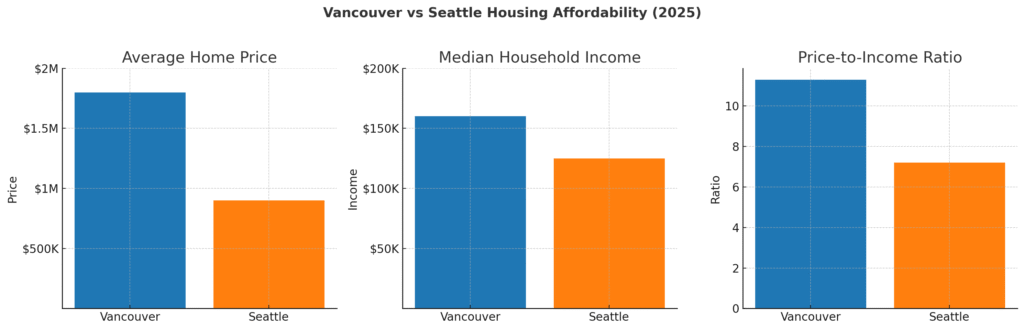
Vancouver: Average home prices sit around $1.8 million, with price-to-income ratios above 11.
San Francisco: Prices average around $1.4 million, with ratios closer to 8, though incomes are higher.
Sydney: Among the most expensive globally, with ratios over 10 despite recent corrections.
London: Ratios range from 8 to 12 depending on borough, with international capital playing a large role in demand.
These numbers show that Vancouver is among the least affordable markets in the world, outpacing even San Francisco in price relative to income.
Investor Activity and Global Demand
International investment continues to shape each of these markets, though to varying degrees. London still attracts overseas capital despite higher transaction taxes. Sydney has seen a resurgence of foreign buyers as borders reopened post-pandemic. San Francisco’s investor demand has softened with the slowdown in tech, but remains relevant.
Vancouver, with stricter taxes on foreign ownership, has shifted toward local demand, but investors, both domestic and international, still see presale condos as a long-term bet. Strong immigration to Canada has also added pressure, keeping demand resilient even in a high-rate environment.
What This Means for Vancouver Buyers and Sellers
For Vancouver buyers, understanding global context matters. The affordability pressures they feel are mirrored in other global cities, showing this is not just a local issue. What is different in Vancouver is the pace of immigration relative to supply, which continues to drive long-term demand.
For sellers, Vancouver’s global reputation as a stable, desirable housing market means long-term fundamentals remain strong. While short-term conditions may favor buyers, the city’s limited land base and global appeal keep it aligned with some of the world’s most resilient markets.
Interest Rate Cuts: What They Mean for Vancouver Buyers and Investors
The Bank of Canada’s recent interest rate cuts have set the stage for a pivotal fall housing market in Vancouver. After two years of aggressive tightening, borrowing costs are finally easing, raising an important question: will this spark a resurgence in demand or simply provide a temporary breather for stretched buyers and investors?
How Rate Cuts Affect Mortgage Payments
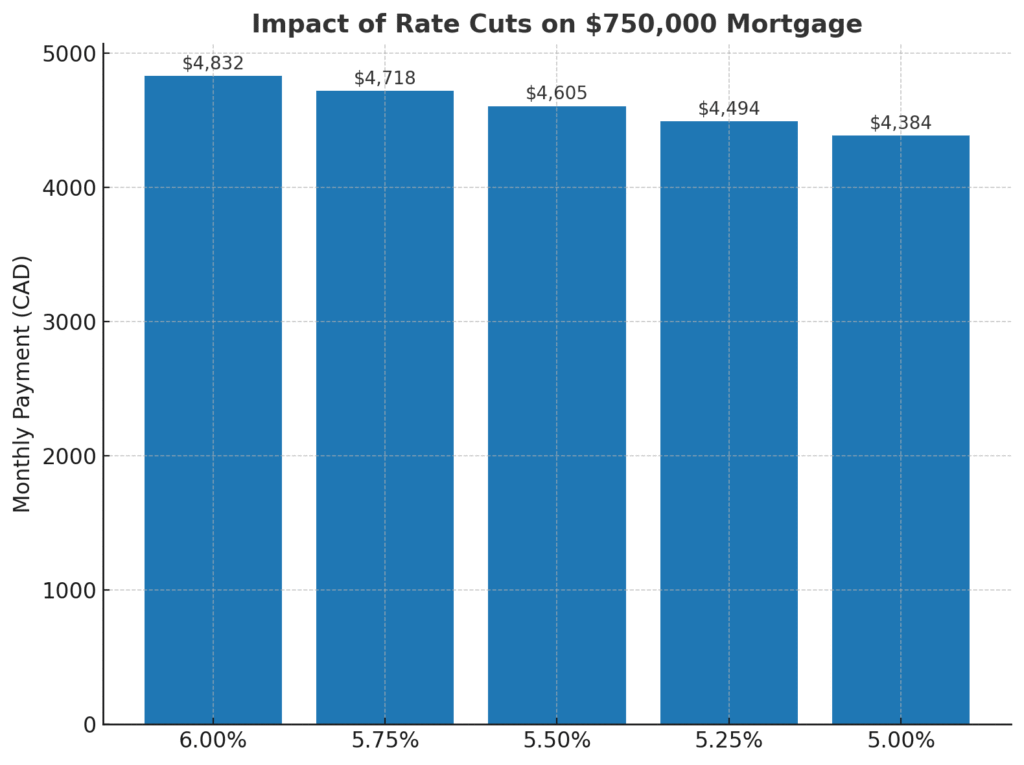
Every 25-basis-point cut may sound small, but it has a tangible impact on affordability. For example, on a $750,000 mortgage, a quarter-point reduction can save households around $120 per month. With multiple cuts expected through late 2025, buyers may see their monthly payments fall by several hundred dollars compared to earlier this year.
For variable-rate borrowers, the relief is immediate. Those with fixed rates will feel the benefit at renewal, where lenders are already offering five-year rates just below 5 percent for the first time in over a year.
Impact on Vancouver Homebuyers
Lower rates improve monthly affordability, but the bigger question is whether they will be enough to bring more buyers into the market. Vancouver’s average detached home price remains above $1.8 million, far outpacing income growth. Even with cheaper borrowing, stress test requirements still demand buyers qualify at rates roughly 2 percent above their contract rate.
This means entry-level buyers may feel some relief, but the affordability gap remains wide. First-time buyers are still leaning heavily on presale condos, where smaller deposit structures and longer completion timelines give them flexibility.
Impact on Investors
Investors stand to benefit differently. Lower rates reduce carrying costs on rental properties, improving cash flow in a market where rents remain strong. However, with active listings rising across Metro Vancouver, investors are weighing the risk of softer resale values against the long-term fundamentals of population growth and limited supply.
Some developers are also offering rate buydowns and assignment-friendly contracts on presales, which appeal directly to investors looking for flexibility.
Canada vs. U.S. Market Reaction
The U.S. Federal Reserve is also cutting rates, though American buyers enjoy the stability of 30-year mortgages. Canadian buyers, who must renew every few years, are more exposed to these shifts. This makes rate cuts a bigger short-term driver of sentiment in Canada than in the U.S.
Toronto is seeing a similar dynamic, with cautious optimism returning as borrowing costs ease. Calgary remains insulated, with demand driven more by affordability and migration than by rate fluctuations.
What This Means for Fall 2025
For Vancouver buyers, lower rates could create a window of opportunity this fall, particularly as listings remain elevated and sellers become more negotiable. For investors, the combination of lower carrying costs and presale incentives could make 2025 one of the most attractive years to enter the market in nearly a decade.
But the broader question remains: will easing rates reignite bidding wars or simply keep the market balanced? September’s data will provide the first real glimpse into how sentiment is shifting.
Canadian Housing Market vs. U.S. Housing Market: Why Affordability Challenges Look Different
Housing affordability is one of the biggest economic challenges facing both Canada and the United States in 2025. At first glance, the markets may look similar: rising mortgage costs, strained buyers, and high demand in major cities. But beneath the surface, Canada’s housing market faces unique structural issues that make affordability a bigger hurdle than in the U.S.
Mortgage & Interest Rates
The Bank of Canada and the U.S. Federal Reserve have both started to cut interest rates this year, easing some of the pressure on borrowers. In Canada, five-year fixed mortgage rates have dipped below 5 percent at some lenders, while in the U.S., the average 30-year fixed mortgage rate has fallen closer to 6 percent.
Here’s where the difference lies: Canadian borrowers typically face shorter mortgage terms and must requalify every few years, exposing them to rate hikes at renewal. In contrast, U.S. buyers can lock in a 30-year rate, giving them long-term stability even if rates rise later. This structural difference makes Canadian households far more sensitive to interest rate changes.
Housing Supply Constraints in Canada
Another key difference is supply. Canada’s housing market, particularly in Vancouver and Toronto, has been constrained for decades due to zoning restrictions, geographic limitations, and slower development timelines. Population growth, fueled by record immigration, has only added more pressure.
In the U.S., while housing supply is tight in major coastal cities like San Francisco and New York, many regions still have room to build. States such as Texas and Florida continue to add housing stock at a pace that Canada’s largest cities simply cannot match. This makes affordability more flexible in the U.S. compared to the chronic undersupply in Canada.
Price-to-Income Ratios
One of the clearest measures of affordability is the price-to-income ratio. In Vancouver, the ratio remains among the highest in the world, with average home prices more than 11 times the median household income. Toronto follows closely behind.
By comparison, U.S. cities like Seattle and Los Angeles have high ratios, but they are generally lower than Canada’s top markets. Even in expensive regions, wage growth and greater housing availability keep ratios from reaching the extremes seen in Canadian markets.
Market Trends Across Canada and the U.S.
Across Canada, affordability challenges are pushing buyers toward secondary markets like Calgary, Edmonton, and Halifax, where price-to-income ratios are far lower and new construction remains more attainable. Vancouver and Toronto continue to face demand, but much of it is being funneled into presale condos and townhomes as buyers seek entry points into the market.
In the U.S., migration patterns are shifting demand from expensive coastal cities to more affordable metros. Phoenix, Austin, and Nashville have seen strong population inflows, supporting price growth even as affordability in legacy markets remains stretched.
Global Real Estate Context
Globally, Canada’s affordability crisis is more comparable to cities like Sydney, Hong Kong, and London, where geographic constraints and population growth collide with limited housing supply. The U.S., by contrast, aligns more closely with European countries such as Germany or Spain, where affordability pressures exist but regional markets can absorb population shifts more easily.
What This Means for Buyers in Both Countries
For Canadian buyers, the path forward remains difficult. Even with lower interest rates, the combination of high prices and strict mortgage stress tests keeps many on the sidelines. This environment makes presale condos attractive, as they allow buyers to enter the market with smaller upfront deposits and delayed completions.
For U.S. buyers, affordability varies widely by region. While San Francisco and New York remain expensive, large swaths of the Midwest and South still offer relatively affordable housing compared to Canadian urban centres. This regional flexibility simply does not exist in Canada, where affordability issues are more widespread.
What to Watch Next Week
Canada’s next housing data release will focus on sales-to-listings ratios in major markets, revealing whether easing rates are unlocking demand. In the U.S., attention will be on housing starts, an important indicator of how much new supply is coming to market. Both countries face affordability hurdles, but the way these markets evolve will continue to highlight just how different Canada’s housing challenges are compared to its southern neighbour.
I use HubSpot to see which pages get read, and to connect that to your enquiry if you get in touch. It only runs if you accept. Essential and anti-spam cookies stay on either way. What each cookie does · Privacy